
Loading...
Serving Big Spring, TX and surrounding areas. (432) 263-5443
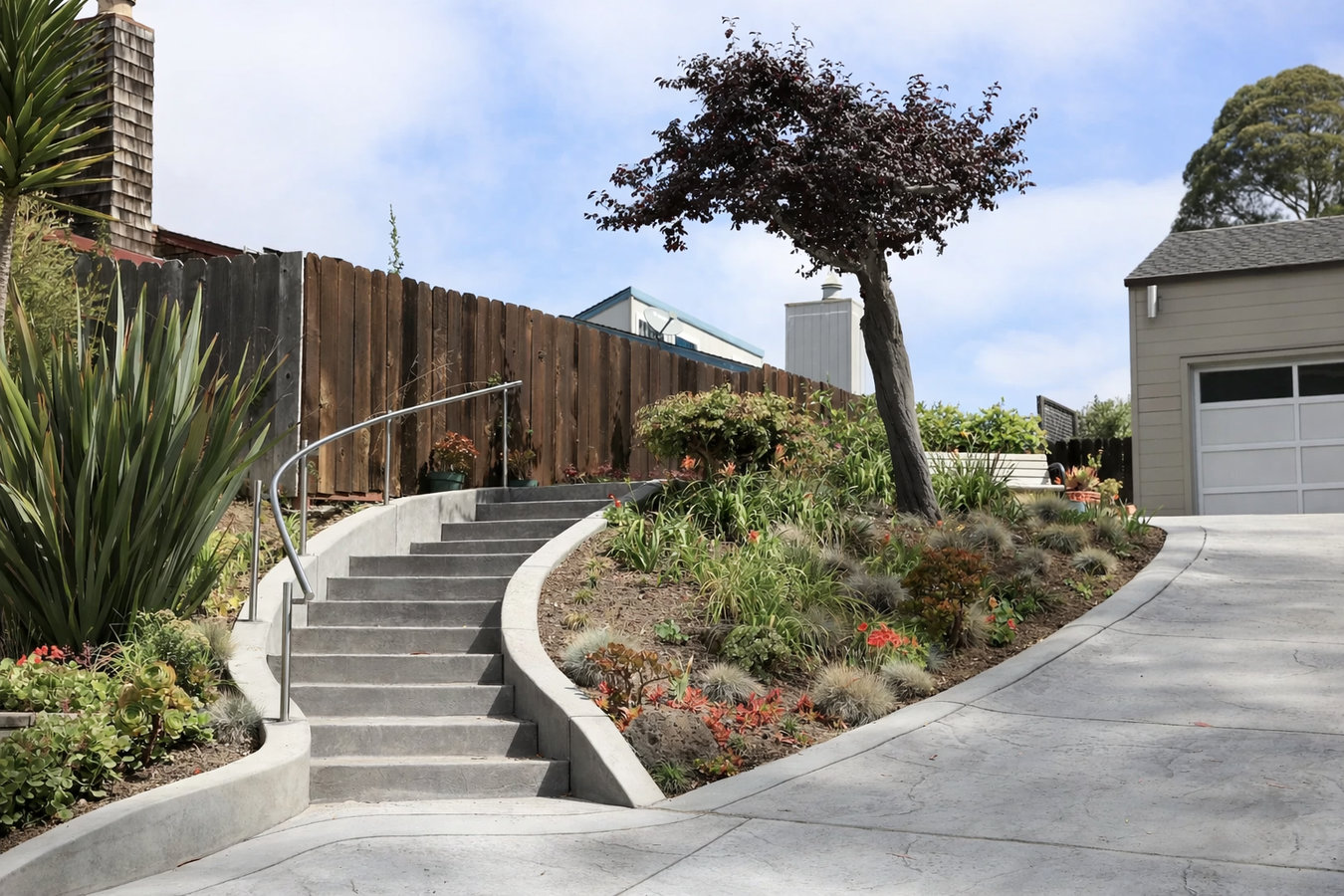
Cracked, shifting, or crumbling entry steps are a trip hazard and a first impression problem - new concrete steps built for West Texas clay soil and summer heat give your home a clean, stable entry that holds up for years.
Concrete steps construction in Big Spring involves forming, pouring, and finishing a set of steps at a front door, back door, or garage entry - most residential step projects take one to two days of active work on site, with light foot traffic typically safe after 24 to 48 hours and full strength reached after about a month. The contractor builds a wood or steel form in the shape of the steps, places steel rebar inside for reinforcement, pours ready-mixed concrete, and finishes each tread with a slight forward slope so water drains away from your entry rather than pooling at the base.
Steps are often the starting point for a larger entry improvement. If you are thinking about adding a connected path from the street, a concrete sidewalk built at the same time means one mobilization, a consistent finish, and no muddy path between the curb and your front door.
Visible cracks running across treads or along edges, chunks breaking away, or a surface that flakes when swept are all signs the steps have reached the end of their useful life. In Big Spring's climate, years of intense sun and occasional hard rain accelerate surface wear, and once the surface starts to break down, damage spreads quickly.
If your steps tilt to one side, have gaps where they meet the foundation, or rock slightly when stepped on, the base underneath has likely moved. The shrink-swell clay soils common in the Big Spring area cause this kind of settling, and a shifted step is a trip hazard that will not fix itself.
Steps that no longer drain properly send water toward your foundation instead of away from it. Given how fast and heavy West Texas rain events can be, standing water at your entry is both a safety issue and a long-term foundation concern. Properly sloped treads fix this.
If the steps look rough, stained, or old compared to the rest of your home's exterior, new concrete steps are one of the most cost-effective ways to refresh the front of your house. A clean, finished entry makes a strong first impression and is among the first things visitors and buyers notice.
We build new residential entry steps from scratch at front doors, back doors, and garage entries. Every set of steps we pour includes steel rebar reinforcement, a compacted gravel sub-base where the soil conditions call for it, and consistent riser heights with a slight forward slope on each tread for proper drainage. For homeowners who want a basic, practical finish, a broom texture is clean and provides excellent grip. For those who want more visual character, exposed aggregate finishes and stamped patterns are both available - and if you are also looking at slab foundation building on the same property, we coordinate the finishes so both surfaces look like they belong together.
We also handle full removal and replacement of old steps - concrete, brick, or wood. In Big Spring, wooden steps rot from the moisture that follows hard rain events, and older brick or block entries can shift and separate over time. Removing them and replacing with poured concrete gives you a more durable, lower-maintenance entry that holds up better to the region's temperature swings. We haul the old material, handle any required permit, and walk you through the finished steps before closing the job.
For homes building steps from scratch at a door or garage entry where none currently exist.
For cracked, shifted, or rotted steps that need to come out before a solid new set can go in.
For homeowners who want broom, exposed aggregate, or stamped surfaces that improve curb appeal alongside function.
Big Spring sits in the Permian Basin of West Texas, where summer temperatures regularly push above 100 degrees Fahrenheit and the clay soils underneath every yard expand and contract with each wet-dry cycle. Those two factors - extreme heat and shrink-swell soil - are the main reasons concrete steps fail prematurely here. Concrete poured in peak afternoon heat can dry too fast on the surface, creating a weak top layer that flakes and cracks within the first season. And when clay soil shifts under a step that was not properly reinforced or supported by a compacted base, the result is a tilted, cracked step that becomes a trip hazard in a short time. Homeowners in Stanton and Colorado City deal with the same soil and climate conditions and call us for the same reason - they need a contractor who already knows what those conditions do to a fresh pour and plans for it.
Most of Big Spring's residential housing stock was built in the mid-20th century, which means a lot of entry steps across the city are 40 to 60 years old and have had decades of West Texas weather working on them. Replacing crumbling, shifted steps is one of the most common concrete jobs we do in this area. The American Concrete Institute sets the industry standards for mix design, hot-weather placement, and finishing that guide how this work should be done - standards we follow on every job, not just on the ones where someone is looking.
Tell us the location, roughly how many steps you need, and whether old steps need to come out first. We respond within 1 business day and schedule a free site visit - no firm price is given without seeing the entry and ground conditions in person.
We measure the opening, check the existing steps or ground, look at drainage and soil conditions, and talk through finish options - broom finish for grip, exposed aggregate, or a stamped pattern. You leave with a clear picture of what the project involves.
Old steps come out first if needed - usually a few hours with a jackhammer and haul-away. The crew grades and compacts the base, adds gravel fill if the soil calls for it, and sets the forms that will shape the steps. In Big Spring heat, this prep often happens in the early morning.
Concrete fills the forms, each tread is finished carefully, and the crew may mist or cover the surface with wet burlap to slow drying in hot weather. Forms are removed once the concrete is firm. We walk you through the finished steps, confirm when they are ready for use, and close out the job.
We come to your home, look at the entry, and give you a straight number - no pressure, no guessing.
(432) 263-5443Big Spring's shrink-swell clay is why steps crack and shift over time. We compact the base carefully, add gravel fill where the soil needs it, and place steel reinforcement inside the forms so the concrete can handle ground movement without breaking apart.
Concrete poured in the peak of West Texas afternoon heat can dry too fast and develop a weak surface layer. We schedule pours for early morning, use mixes suited to high-temperature conditions, and take active steps during curing to prevent surface cracking from the first season onward.
Each tread we build has a slight forward slope so water drains away from your entry, not toward your foundation. In Big Spring, where a dry week can be followed by a sudden hard downpour, steps that direct water away are a quiet but important protection for your home.
We handle the permit application when one is required, and we carry the liability insurance and workers compensation coverage you should ask any contractor to show you. The{' '}American Concrete Institute sets the standards we follow for mix design and finishing - not a minimum bar, but a professional one.
Every step project we complete in the Big Spring area is built with the same soil and climate conditions in mind - proper base prep, reinforcement, hot-weather pour management, and drainage that protects your foundation. Call us or send a message and we will respond within 1 business day to schedule a free on-site look.
If your entry steps connect to a slab foundation, make sure both are built to the same standard for soil movement and drainage.
Learn MoreConnect your new entry steps to a matching concrete walkway that carries visitors from the street to your front door without a muddy path in between.
Learn MoreOur crew knows how to work in West Texas heat - let's get your new steps on the calendar before the season peaks.