
Loading...
Serving Big Spring, TX and surrounding areas. (432) 263-5443
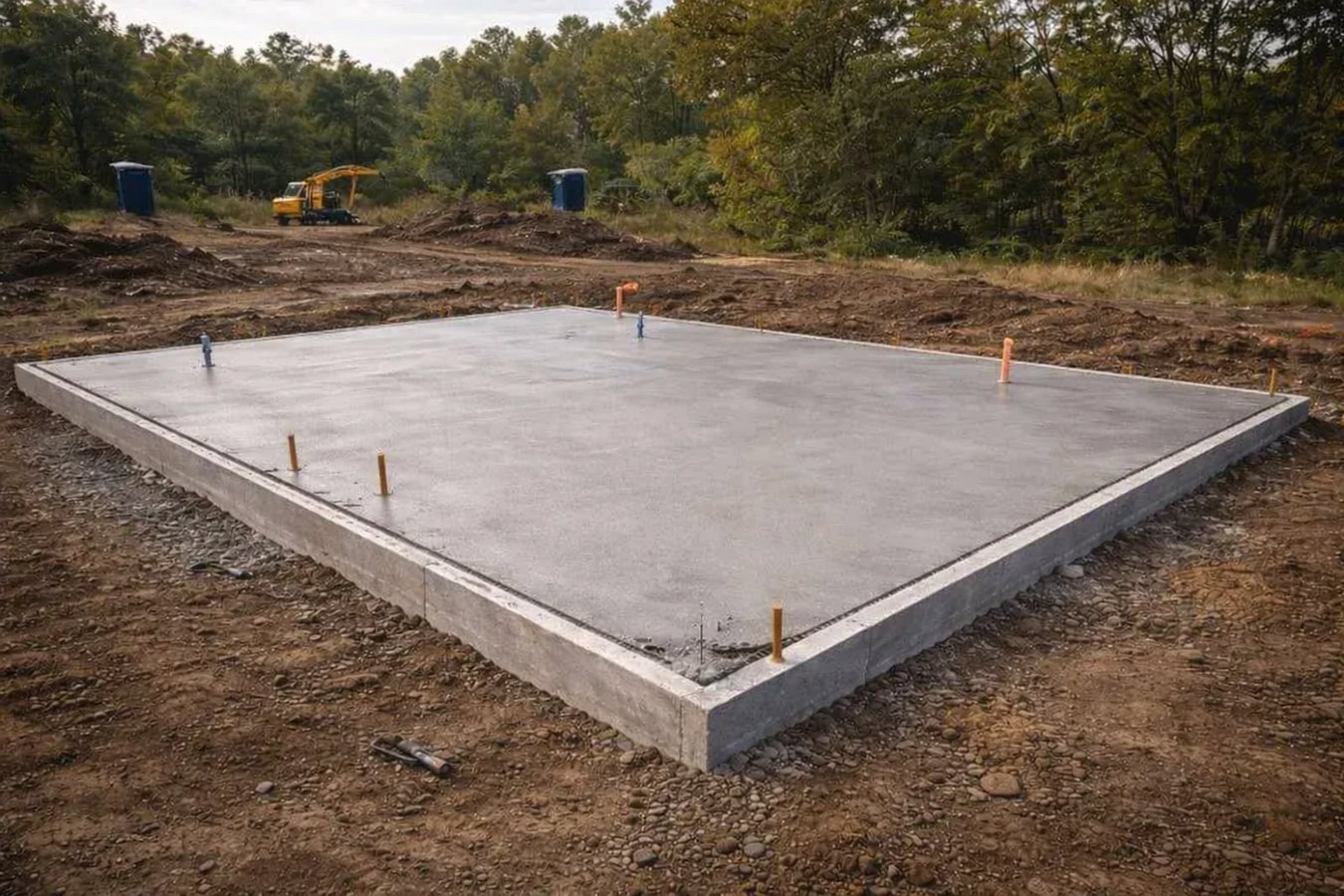
The shrink-swell clay under Big Spring homes is harder on foundations than most homeowners realize - a slab built without accounting for it will crack, shift, and cost you far more later than it would have cost to build it right.
Slab foundation building in Big Spring, TX starts with clearing and grading the ground, compacting the soil, laying a gravel base, placing steel reinforcing bars inside formed edges, and pouring ready-mixed concrete all at once - most residential pours take one to two days of active work, with the slab ready for framing after several days of curing. The most important local variable is the expansive clay soil common across Howard County, which swells when wet and shrinks when dry. That repeated movement is the main reason slabs fail in this area. A foundation built with deeper perimeter beams and proper reinforcement for these soils lasts. One built to a generic plan often does not.
Foundation work and structural concrete go hand in hand. If your project also involves foundation installation for a new structure or replacement of a deteriorated base, coordinating both scopes at once means one site assessment, consistent soil prep, and concrete design matched to the same ground conditions throughout.
If you have a lot in or around Big Spring and are ready to start construction, a poured concrete slab is the standard starting point for residential building in this area. It is the foundation type most local builders and framers are set up to work with, and it suits West Texas soil conditions when built correctly.
Doors and windows that no longer close properly, visible cracks running through interior walls, or floors that feel noticeably uneven are all signs the existing foundation is no longer doing its job. When a contractor determines the slab has moved beyond repair, a full replacement is the right path forward.
A new addition - whether a garage, workshop, or extra room - needs its own properly poured slab tied to or matched to the existing structure. Getting this right from the start prevents the addition from separating or settling differently than the main house over the years.
Extended droughts in the Big Spring area can cause the ground to shrink dramatically, pulling away from existing foundations and causing serious structural damage. If a shed, garage, or older home has been compromised by years of soil movement, a new slab built to current standards gives you a clean, stable start.
We build slab foundations for new homes, room additions, garages, workshops, and outbuildings across Big Spring and the surrounding West Texas area. Every slab includes soil grading and compaction, a gravel drainage base, steel rebar or wire mesh reinforcement, and proper perimeter beam depth sized for local soil conditions. We pull permits on every structural project and coordinate the pre-pour inspection with the city - the inspector checks our steel placement and forms before any concrete is ordered. For homeowners who are also planning concrete footings for walls, posts, or an attached structure, we can handle both scopes together so the base and the supporting elements are poured to match.
We also handle full slab replacement when an existing foundation has moved beyond patching. That includes removing the old concrete, addressing whatever soil or drainage condition caused the original failure, and installing a new slab designed for the ground conditions on that specific site. Replacement jobs follow the same permit and inspection process as new construction - no shortcuts because it is a second pour.
For residential lots ready for construction in Big Spring and Howard County - designed for local soil conditions from the start.
For new structures attached to or separate from an existing home, poured and tied correctly so they do not settle apart over time.
For slabs that have moved, cracked, or failed beyond repair - removed, re-graded, and replaced with a correctly engineered pour.
Much of the Big Spring area sits on shrink-swell clay soils that expand when wet and contract when dry. West Texas drought cycles are not mild - the ground can pull away from a foundation by inches during a prolonged dry stretch, then heave back when rain finally arrives. A contractor who designs every slab the same way regardless of soil is setting homeowners up for expensive problems. The perimeter beam depth, the reinforcement spacing, and the site drainage all need to account for what the ground in this part of Howard County actually does year after year. Homes built before current standards reflect that lesson clearly, and neighborhoods with older housing stock see repeated foundation repair calls because the original slabs were not built with enough margin for local soil behavior. Homeowners in Coahoma and Forsan face the same soil conditions as Big Spring and can rely on us for the same level of local design care.
Big Spring summers regularly push temperatures above 100 degrees Fahrenheit, and the air is consistently dry. Those conditions pull moisture out of fresh concrete much faster than is ideal for a proper cure. If a crew does not manage the pour timing and protect the slab afterward, the surface cracks and the long-term strength of the concrete is reduced. We schedule pours for early morning in summer, apply curing compounds immediately after finishing, and protect the slab during its first critical days - because the concrete that gets poured in the worst conditions can still cure as well as one poured in ideal conditions if the crew plans for it. The American Concrete Institute publishes detailed guidance on hot-weather concrete placement, and those practices are part of how we approach every summer pour in West Texas.
Tell us what you are building and where. We schedule a free on-site visit and respond within 1 business day. After seeing your lot and assessing the soil, we provide a written estimate covering excavation, materials, reinforcement, and labor - no guessing.
Before any work begins, we submit the permit application to the appropriate local office. Permit review typically takes a few business days. We handle the paperwork and let you know when the schedule is confirmed - you should not have to chase this step yourself.
The crew grades the site, compacts the soil, lays a gravel base, and sets forms to define the slab shape. Reinforcing steel is placed inside the forms per the engineered layout. Any plumbing that runs under the slab is installed here, before the concrete goes in.
A building inspector checks the forms, reinforcement, and soil prep before any concrete is ordered - the pour cannot happen until this step is passed. Once approved, ready-mixed concrete is delivered and finished. In Big Spring summer heat, we apply curing compounds or cover the slab to prevent surface cracking from rapid moisture loss.
We visit your lot, assess the soil, and give you a written estimate with no pressure. Replies within 1 business day.
(432) 263-5443The shrink-swell clay common around Big Spring is the biggest threat to a slab foundation in this region. We design every foundation with deeper perimeter beams, proper reinforcement patterns, and correct drainage grading so the ground can cycle through drought and rain without pulling your foundation apart.
Big Spring summers regularly push above 100 degrees Fahrenheit, and fresh concrete can lose moisture dangerously fast in this heat and wind. We schedule pours for early morning, use curing compounds on every job, and never pour during the hottest afternoon hours in summer - protecting the long-term strength of your slab.
A permit means a licensed inspector checks your steel, forms, and soil prep before the concrete goes in - an independent confirmation the work is correct before it is buried permanently. We handle pulling the permit and scheduling the inspection on every foundation job, without exception.
We follow the widely recognized guidelines from the American Concrete Institute for mix design, reinforcement, and construction quality. Those guidelines exist because consistent standards produce slabs that hold up - not just on pour day, but for the life of the structure above.
Every foundation we pour goes through the same process: site assessment, proper soil prep, permitted steel inspection, and a hot-weather curing plan if the season calls for it. That consistency is how we protect homeowners from the most common and costly foundation failures in this part of West Texas.
Full foundation installation services for new homes, additions, and replacement projects across the Big Spring area.
Learn MoreProperly poured footings that anchor walls, posts, and structures to stable ground - the base every slab depends on.
Learn MoreOur crew knows West Texas soils and is ready to schedule your pour - contact us now before summer heat or the next drought cycle complicates your timeline.