Loading...
Serving Big Spring, TX and surrounding areas. (432) 263-5443
In Big Spring, the expansive clay and caliche ground under your lot can defeat a foundation that was not designed for it - getting the soil prep, reinforcement, and curing right the first time protects everything built above it.
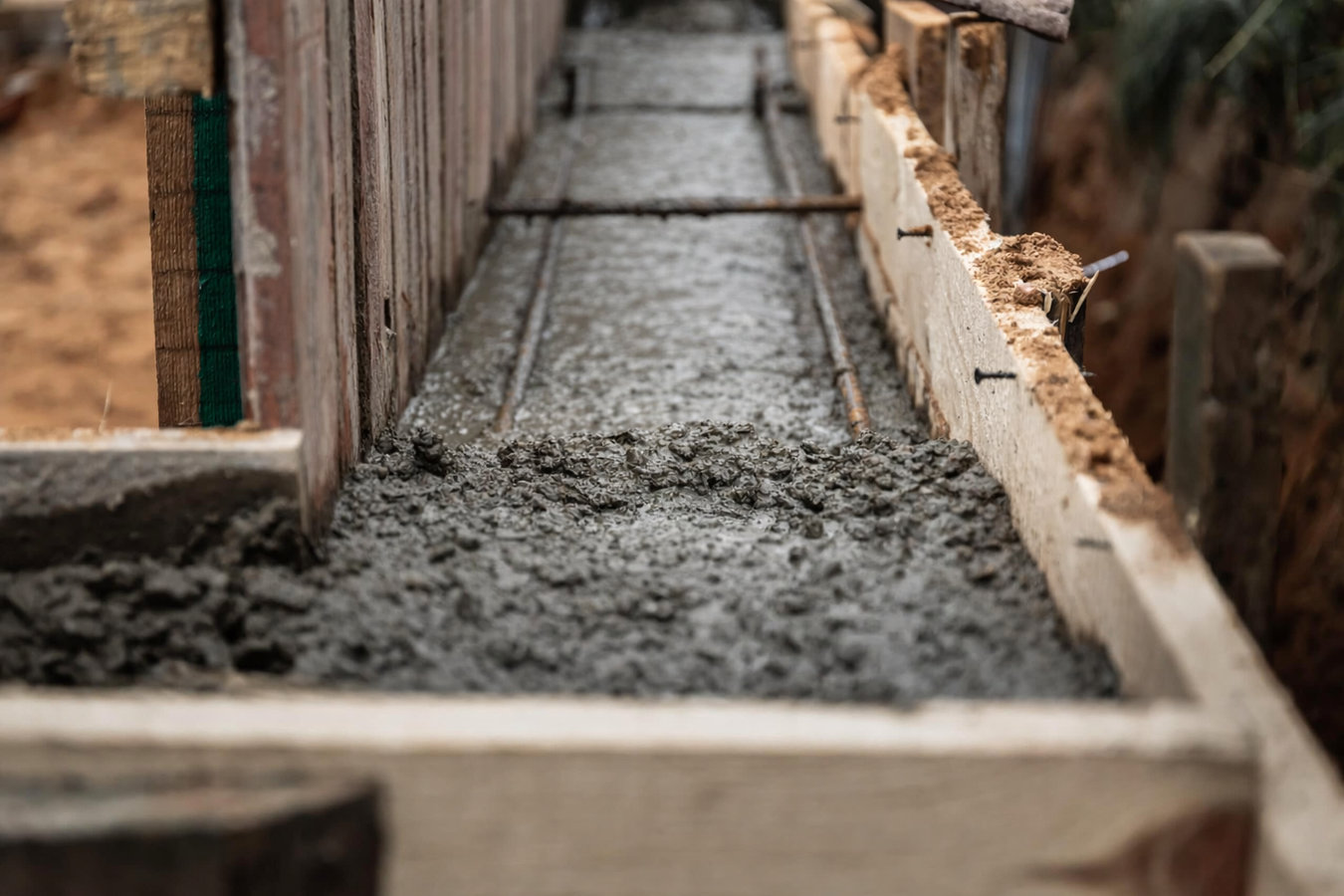
Foundation installation in Big Spring, TX involves excavating the site, setting forms, placing reinforcing steel, pouring concrete, and allowing the slab to cure before framing begins - a straightforward residential foundation can run from a few days to about two weeks from excavation to a cured, ready-to-build surface, depending on footprint size, soil conditions, and weather. The expansive clay and caliche soils common in Howard County are the biggest local variable. They expand when wet and shrink when dry, which stresses a foundation over time. A contractor who designs every job the same way regardless of soil is not accounting for what the ground here actually does - and homeowners end up paying for it later through cracked walls, sticking doors, and uneven floors.
Foundation installation and slab work often overlap. If your project is a new home or structure that needs everything from the ground up, our slab foundation building service covers the full scope - site prep, permit, inspection, pour, and cure - as a single coordinated job.
If you are starting new construction - whether a full home, a garage, or a room addition - a properly installed foundation is the first and most critical step. Nothing else can be built until the base is in place and approved by the local inspector.
Sometimes a slab has cracked, settled, or heaved so severely - often due to the expansive clay soils common in West Texas - that patching or leveling is no longer practical. When a structural professional determines the slab needs replacement rather than repair, a full installation is the right path.
If you have a detached garage, workshop, or storage building that sits on an inadequate base, or you are adding a new permanent structure, a proper concrete foundation is what makes it last. Structures in Big Spring face intense heat, occasional high winds, and soil movement - a solid base keeps them level and sound.
Doors that no longer close properly, floors that feel noticeably uneven, or large cracks running through interior walls can all point to serious foundation movement. In West Texas, the shrink-swell soil cycle is a common culprit. When a foundation specialist determines the movement is too advanced to correct, replacement may be the only lasting solution.
We install concrete foundations for new homes, garages, additions, workshops, and replacement projects across Big Spring and the surrounding area. Every job includes a site assessment to evaluate soil conditions and flag any caliche or drainage issues before we design the foundation. We handle the permit application, coordinate the required pre-pour inspection, and do not pour concrete until the inspector has signed off on the steel placement and forms. For projects that also need concrete parking lot building or other large paved surfaces on the same property, we can coordinate both scopes to use consistent base prep and material specifications.
We also handle foundation replacement for slabs that have moved or failed beyond repair. Old concrete is removed, the soil condition that caused the failure is addressed, and a new foundation is installed correctly for the site. Replacement jobs go through the same permit and inspection process as new construction. We walk you through the finished slab, explain proper perimeter moisture maintenance for Big Spring dry seasons, and give you a clear timeline for when framing can safely begin.
For homes, garages, and additions starting from bare ground - designed for Howard County soil conditions and permitted through the appropriate local office.
For slabs that have failed beyond patching, with full removal, soil correction, and a new pour engineered for the specific conditions at your site.
For permanent workshops, storage buildings, and detached structures that need a solid concrete base to stay level through West Texas soil cycles.
Parts of the Big Spring area sit on or near caliche - a hard, calcium-rich layer below the topsoil that is common across West Texas. Caliche makes excavation harder and more expensive, and it affects drainage around the foundation. A contractor who has not worked in this area will often hit it mid-job unprepared, which causes delays and unplanned cost. The clay-heavy soils above the caliche layer add a second challenge: they swell with rain and shrink during drought in a cycle that puts steady pressure on any concrete. Homes throughout Howard County reflect this reality, and foundation repair calls are common in neighborhoods built before current reinforcement standards. Homeowners in Stanton and Garden City face identical soil challenges and can rely on us for foundation work designed for this specific ground.
Big Spring summer heat is a second major factor. Temperatures above 100 degrees Fahrenheit combined with low humidity pull moisture out of fresh concrete rapidly, which can cause surface cracking and weaken the slab if the crew does not actively manage the cure. Spring and fall are the most forgiving seasons for foundation pours here, but summer work is done regularly with the right practices in place - early-morning pours, curing compounds applied immediately after finishing, and protection from direct sun and wind during the first several days. The Texas Department of Licensing and Regulation requires contractors doing this type of structural work to hold a valid state license - and we do. You can verify contractor license status through their online database before signing any agreement.
We visit your property, assess the soil conditions - including flagging any caliche or drainage concerns - and give you a written estimate covering excavation, materials, labor, and any soil prep needed. Replies within 1 business day of your call.
Before any digging starts, we pull the building permit from the appropriate local authority. For larger or more complex projects, a structural engineer plan may be part of the permit application. We handle the paperwork - you should not have to navigate city or county offices yourself.
The crew marks the layout, excavates to the required depth, grades and compacts the soil, and installs a gravel or sand base layer where needed. Reinforcing steel is then placed inside the forms according to the project plan - the critical step the building inspector checks before any concrete is ordered.
Once the inspector signs off, concrete trucks arrive and the crew pours and finishes the slab. In summer, pours are scheduled for early morning and curing compounds are applied immediately. After curing, we walk you through the finished foundation, explain control joints, and discuss how to maintain proper moisture around the perimeter in Big Spring dry seasons.
We visit your site, assess the soil, and give you a written quote - no pressure, no surprises. Responses within 1 business day.
(432) 263-5443The caliche-heavy, expansive clay soils common around Big Spring add real complexity to excavation and foundation design. We have worked in these soils across Howard County and the surrounding area - we plan for the hard ground, adjust our approach for the soil conditions we find, and design foundations that perform in this specific environment.
We pull permits and coordinate inspections on every foundation project - without exception. An inspector checking steel placement before the pour is an independent confirmation that the work is correct before it is buried permanently. That documentation also protects you at resale and for insurance purposes.
Big Spring summer heat and dry air speed up concrete curing too fast without proper management. We schedule early-morning pours, apply curing compounds, and protect fresh slabs from direct sun and wind during the first critical days. Spring and fall seasonal timing is also factored into project scheduling when the customer has flexibility.
Texas requires contractors doing structural concrete work to hold a valid state license, verifiable through the Texas Department of Licensing and Regulation. Hiring a licensed contractor means the state has reviewed their qualifications and you have legal recourse if something goes wrong.
When a homeowner calls us for a foundation in Big Spring, they get a crew that has seen this soil, worked in this heat, and knows exactly what a foundation in this part of West Texas needs to hold up for decades. That local experience is not a marketing claim - it is what shows up in how the slab is designed and how the job is managed from the first site visit to the final walkthrough.
New residential slab foundations poured and reinforced specifically for West Texas soil conditions and heat.
Learn MoreCommercial concrete paving for parking areas that handles heavy vehicle loads and the demands of a West Texas climate.
Learn MoreOur crew knows West Texas soil, permits, and hot-weather pours - reach out now so we can get your project on the schedule before the next busy season.